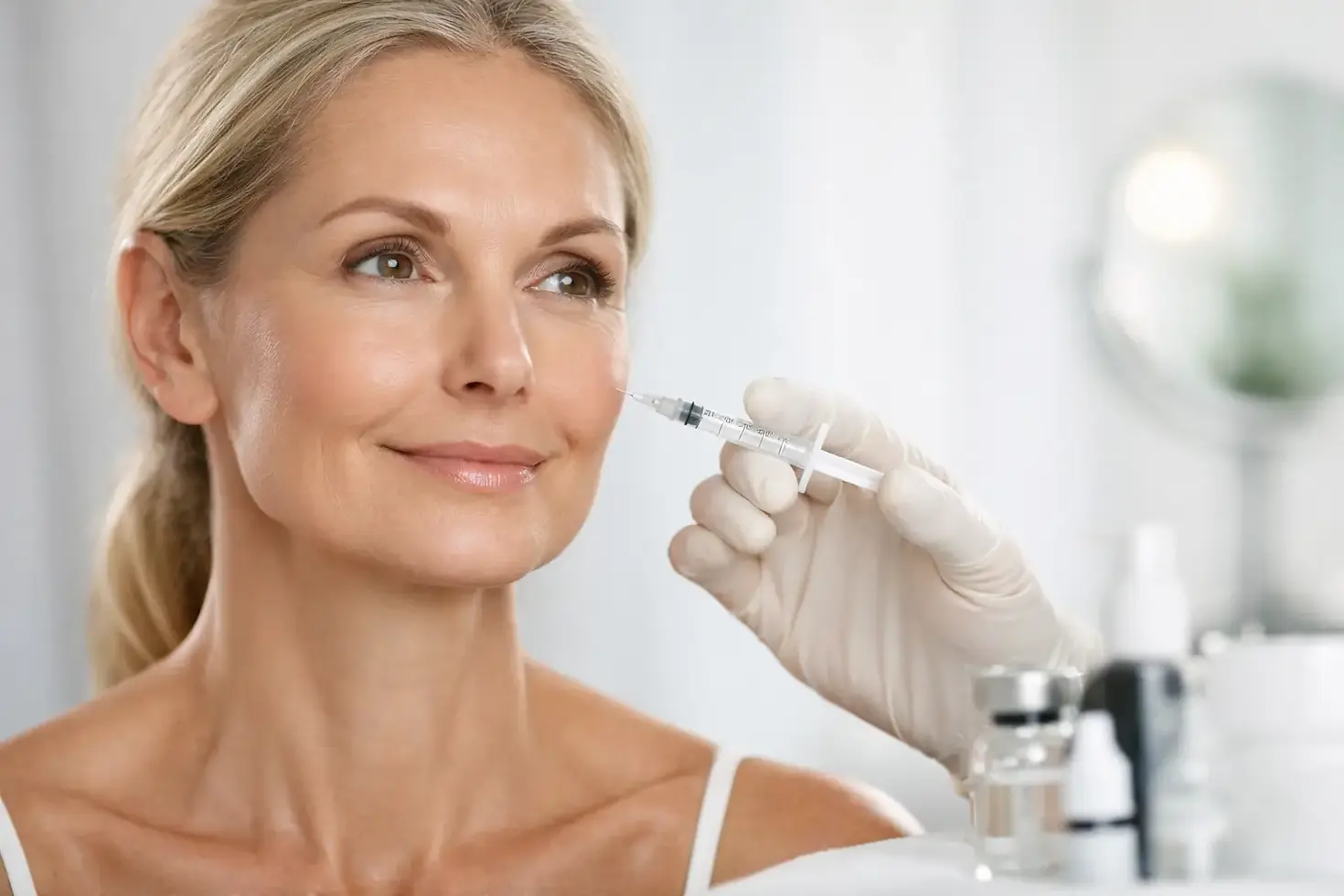
What Is the Best Treatment for Volume Loss?

A face can look tired long before it feels tired. Often, the change is not a new wrinkle or a sudden shift in skin quality. It is volume loss: the subtle flattening at the cheeks, temples, under-eyes, or around the mouth that changes the way light moves across the face. The best treatment for volume loss is not one universal product. It is a personalized plan that restores support where it has been lost while preserving the features that make you look like yourself.
For clients who want to look refreshed rather than treated, the goal is balance. A thoughtful approach considers your facial structure, skin quality, pace of aging, lifestyle, and comfort with maintenance. The result should feel refined, natural-looking, and entirely your own.
Why Facial Volume Loss Happens
Facial aging is more layered than lines alone. Over time, we gradually lose collagen, elastin, fat, and even some of the structural support provided by bone. The skin may become thinner and less resilient, while the fat pads that once created soft, youthful contours can descend or diminish.
This can show up as hollow temples, flatter cheeks, deeper smile lines, marionette lines, under-eye shadows, or a less defined jawline. Weight loss, genetics, sun exposure, stress, and hormonal changes can make these shifts more noticeable. In Houston, frequent sun exposure can also contribute to changes in skin quality that make volume loss appear more pronounced.
Treating the line alone is not always the answer. A fold around the mouth, for example, may be partly caused by lost support higher in the cheek. Restoring that support first can create a softer, more harmonious improvement with less product in the lower face.
The Best Treatment for Volume Loss Depends on the Area
The right treatment begins with an in-person assessment, not a menu of syringes. A skilled injector evaluates how your face moves, where volume has changed, and whether your concern is truly volume loss, skin laxity, dehydration, or a combination of several factors.
Dermal fillers for immediate structural support
Hyaluronic acid dermal fillers are often the most direct option for restoring lost facial volume. They can be placed strategically in areas such as the cheeks, temples, chin, jawline, and certain folds to recreate contour and support. Because hyaluronic acid attracts water, it can provide a soft, hydrated look when selected and placed appropriately.
For many clients, filler is the best option when they want a visible, same-day improvement with little disruption to a busy schedule. The treatment can be tailored precisely, and hyaluronic acid filler is reversible in appropriate circumstances, which offers an additional measure of reassurance.
The trade-off is that fillers are not permanent. Depending on the product, placement, metabolism, and area treated, results may last from several months to two years or longer. More is not necessarily better. Overfilling can obscure natural facial movement and create the very overdone look most clients wish to avoid. Conservative placement and a gradual plan tend to deliver the most elegant results.
Biostimulatory options for gradual collagen support
Some volume concerns benefit from treatments designed to encourage the body to build collagen over time. Biostimulatory injectables are typically best for clients with broader facial thinning, early laxity, or a preference for gradual change rather than an instantly filled appearance.
These treatments work differently from traditional hyaluronic acid filler. Instead of simply occupying space, they support collagen production over a series of weeks or months. Results develop slowly and can look exceptionally natural because the improvement is integrated with your own tissue response.
Patience is part of the process. If you have an event next weekend, a collagen-stimulating treatment alone may not be the right first choice. But for a client who wants long-term structural support and is comfortable with a progressive result, it can be a beautiful fit.
PRF and regenerative care for subtle refinement
Platelet-rich fibrin, or PRF, uses components from your own blood to support skin quality and tissue renewal. It may be considered in delicate areas where the concern is less about replacing a large amount of volume and more about improving crepiness, thin skin, or a tired appearance, particularly around the eyes.
PRF is not a substitute for structural filler when there is significant volume loss in the cheeks or temples. Its strength is subtlety. It can be a thoughtful addition for someone seeking a regenerative approach, or for clients whose under-eye concern involves skin quality as much as shadowing.
A personalized plan may also pair regenerative treatments with microneedling or other skin-rejuvenation services. Improving texture, hydration, and collagen can make restored volume look even more natural. Volume and skin quality are connected, but they are not the same concern, so each deserves its own strategy.
When Filler Is Not the Complete Answer
Injectables can create meaningful improvement, but they cannot correct every type of facial aging. If laxity is significant, adding volume in an attempt to lift the face may create heaviness rather than refinement. In those cases, a provider may recommend a more conservative injectable approach, skin-tightening strategies, or a surgical consultation when appropriate.
Under-eye hollows also require careful judgment. What looks like volume loss may involve pigmentation, puffiness, prominent fat pads, thin skin, or anatomical factors that do not respond well to filler. The best treatment may be PRF, skin-focused care, a different area of facial support, or no injectable treatment in that location at all.
This is why an experienced provider should be comfortable saying that a requested treatment is not the best choice. Good aesthetic care is not about treating every concern with the same tool. It is about protecting your long-term result.
What a Natural-Looking Treatment Plan Can Include
A balanced plan often unfolds in stages. First, structural areas such as the cheeks or temples may be addressed conservatively. Then, after swelling resolves and the face settles, smaller refinements can be considered around the lower face, chin, or jawline. This measured process helps prevent overcorrection and gives you time to decide how much change feels right.
Your plan should also account for your calendar. Mild swelling or bruising can occur after injectable treatment, even when performed carefully. If you have an important event, professional photos, or travel planned, scheduling with adequate lead time is wise. Avoiding blood-thinning supplements and alcohol before treatment may be recommended by your provider based on your health history.
During a consultation, expect questions about prior treatments, medications, allergies, medical conditions, and your aesthetic goals. Clear communication matters. Bringing reference photos can be helpful, but the most useful conversation centers on how you want to feel when you look in the mirror: rested, balanced, defined, or simply more like yourself.
Choosing Care That Respects Your Features
The best outcomes are rarely dramatic in a single moment. They are the ones where friends say you look well-rested, where makeup sits more smoothly, and where your reflection feels familiar again. For many people, the best treatment for volume loss combines strategic filler for support with collagen-focused or regenerative care for skin quality and long-term refinement.
At StevEsthetics Skin Design, concierge care allows that conversation to happen privately and without rushing. Treatment can be planned around your face, your goals, and your life, with the comfort of receiving professional aesthetic care in your own setting.
Facial volume loss is personal, and the right solution should be, too. A careful assessment and conservative, provider-led plan can help you feel good in your skin without asking you to become someone else.


Comments