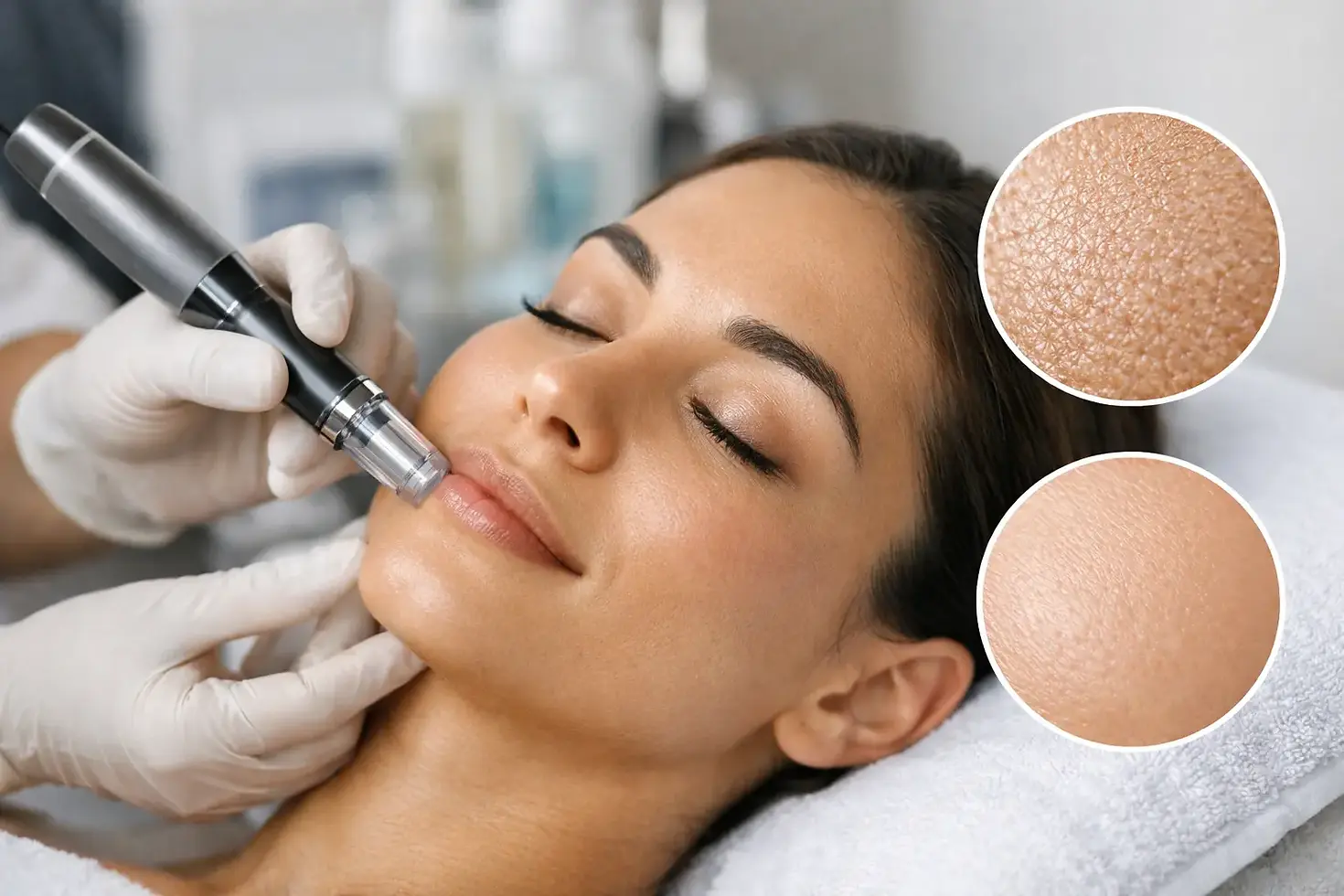
How Microneedling Improves Texture and Tone

Texture concerns rarely look the same from one person to the next. For one client, it may be enlarged-looking pores around the cheeks and nose. For another, it is lingering acne scarring, fine lines around the mouth, or a complexion that no longer reflects how well they care for their skin. Understanding how microneedling improves texture begins with recognizing that smoother-looking skin is not simply about removing the surface. It is about encouraging healthier renewal beneath it.
Microneedling is a collagen-induction treatment designed to support the skin’s natural repair process. With a personalized approach, it can help improve uneven texture gradually while preserving what makes your features and skin uniquely yours.
How Microneedling Improves Texture Below the Surface
During microneedling, a medical-grade device creates controlled microchannels in the skin. These tiny openings trigger a natural wound-healing response. In response, the skin begins producing new collagen and elastin, two structural proteins that help it appear firmer, smoother, and more resilient.
Collagen is often described as the skin’s internal support network. Over time, sun exposure, acne inflammation, aging, and everyday stress can disrupt that network. Skin may begin to look less even, pores can appear more visible, and shallow scars or fine lines may catch the light more noticeably. Microneedling does not erase skin history overnight. Instead, it encourages gradual remodeling that can soften the appearance of these concerns.
The microchannels also temporarily improve topical product absorption. Depending on your treatment plan, a provider may pair microneedling with carefully selected growth-factor or regenerative options, such as PRP, PRF, or exosomes. These additions are not required for every client, but they may be considered when appropriate to support recovery and a more customized skin-rejuvenation plan.
What Types of Texture Can It Help Improve?
Microneedling is especially valued because “texture” is a broad concern. A thoughtful consultation identifies what is actually creating the uneven appearance before recommending a treatment plan.
Acne scars and shallow depressions
Atrophic acne scars are the indented scars that remain after inflammation has changed the skin’s collagen structure. Microneedling can help soften the look of mild to moderate rolling scars and some boxcar scars by encouraging collagen remodeling in the treated area. Deep, narrow ice-pick scars often require a different approach or a combination plan, so expectations should be specific from the start.
Enlarged-looking pores
Pores do not physically open and close, and no treatment can make them disappear. However, when collagen around a pore is better supported and the skin surface is more even, pores may look less noticeable. This is why clients often describe their complexion as refined after a series of treatments, even though their natural pore structure remains.
Fine lines and crepey skin
Fine lines can become more apparent when skin is dehydrated, thin, or losing collagen. Microneedling may help improve the appearance of fine lines over time, particularly in areas where skin has begun to look less smooth or elastic. It is not a replacement for a surgical lift, nor does it create the immediate volume of filler. Its role is skin quality: helping the surface look more refreshed and supported.
Roughness and uneven tone
Sun exposure and slower cell turnover can leave the complexion looking dull or uneven. By prompting repair and renewal, microneedling can improve the way light reflects off the skin. The result is often a healthier-looking finish rather than an artificial change in color or facial expression.
Why Results Take Time
A microneedling treatment creates an immediate response, but collagen remodeling is not immediate. Mild redness and a temporary glow may appear in the first few days, while more meaningful texture changes develop gradually over several weeks. Your body needs time to build and reorganize collagen.
Most clients benefit from a series of treatments rather than a single appointment. The right number depends on the concern being treated, the depth of scarring, skin sensitivity, age, and how consistently you protect your results between visits. A client focused on overall refinement may need a different plan than someone treating established acne scars.
Spacing also matters. Treating too frequently does not force the skin to make collagen faster. Allowing appropriate recovery time helps protect the skin barrier and gives each treatment an opportunity to work as intended.
A Personalized Plan Matters More Than a One-Size Setting
Needle depth, technique, treatment area, and product selection should never be chosen from a generic menu. The skin around the eyes, for example, requires a different level of care than thicker skin on the cheeks. Active acne, recent sun exposure, a history of pigment changes, certain medications, and medical conditions can all influence whether microneedling is appropriate right now.
For clients with deeper skin tones, a careful assessment is particularly valuable. Any procedure that creates controlled inflammation carries a potential risk of post-inflammatory hyperpigmentation when performed too aggressively or without the right pre- and post-treatment guidance. Experienced care is not about making treatment more intense. It is about selecting an approach that respects your skin’s needs and supports natural-looking results.
At StevEsthetics Skin Design, the focus is on provider-led care that begins with listening. Your treatment should fit your goals, schedule, skin history, and comfort level, whether that means microneedling on its own or as part of a broader plan for skin revitalization.
What to Expect Before and After Treatment
Before treatment, your provider will review your skin concerns, health history, current skincare routine, and recent treatments. You may be asked to pause certain active products, such as retinoids or exfoliating acids, for a short period beforehand. Avoiding unnecessary sun exposure is also essential, especially if you are prone to discoloration.
A topical numbing cream is typically used to make the experience more comfortable. During the appointment, clients often feel pressure and a light vibrating sensation rather than sharp pain. Treatment time varies based on the areas being addressed, but the appointment is designed to feel focused, calm, and unhurried.
Afterward, expect redness similar to a mild sunburn for one to three days, though recovery can vary. Skin may feel warm, tight, or slightly dry at first. Gentle cleansing, hydration, sun protection, and avoiding heat, sweat-heavy workouts, makeup, and strong active ingredients for the recommended recovery window can make a meaningful difference.
Do not schedule microneedling immediately before a major event if you have never had it before. While many clients recover quickly, your skin deserves enough time to settle. Planning ahead helps ensure the experience feels like self-care, not a last-minute source of stress.
Microneedling Versus At-Home Rollers
At-home rollers may appear convenient, but they do not offer the precision, sterility, or customized depth of professional microneedling. Reusing devices, treating inflamed skin, or applying excessive pressure can increase the risk of irritation, infection, and unwanted pigment changes.
Professional treatment also includes something a device alone cannot provide: clinical judgment. A provider can determine whether your texture concern is likely to respond to microneedling, whether another treatment may serve you better, and when your skin needs more time before the next session.
Is Microneedling Right for Your Skin?
Microneedling can be an excellent option for adults who want to improve skin texture without changing their facial character. It tends to suit clients seeking gradual, natural-looking refinement, especially for fine lines, mild scarring, uneven texture, and a dull or less resilient-looking complexion.
It may need to be postponed for active breakouts, open wounds, active skin infections, certain inflammatory skin conditions, or recent sunburn. Those who are pregnant, breastfeeding, prone to abnormal scarring, or managing a medical condition should discuss their individual circumstances with a qualified provider before treatment.
The most satisfying results usually come from a realistic plan, consistent sunscreen use, supportive skincare, and patience with the process. Smooth skin is not about looking filtered. It is about helping your complexion look rested, healthy, and like it has been cared for with intention.
When your treatment is tailored to the texture concern you actually have, microneedling can become a quiet but meaningful part of feeling good in your skin - on your schedule, in your own space, and without sacrificing a natural sense of yourself.


Comments